Decentralized SaaS Buying: A Smarter Way to Manage Software
How businesses can balance software flexibility, cost control, and security

Introduction
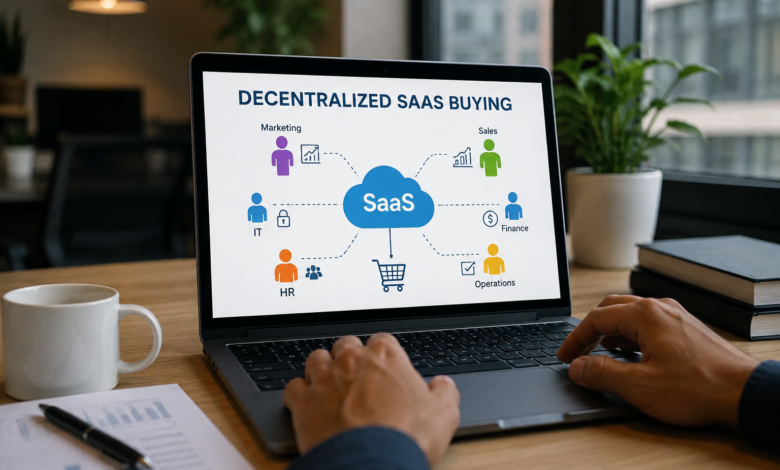
Decentralized SaaS buying is changing how modern organizations purchase and manage software. Instead of every software decision going through a central IT or procurement department, individual teams and business units can choose the applications they need.
This approach has become increasingly common because SaaS products are easy to discover, trial, and purchase. Marketing teams may select their own automation platforms, sales departments may choose customer-management tools, and development teams may adopt specialized software without waiting for a lengthy company-wide purchasing process.
The flexibility can help organizations move faster, but it can also create challenges involving costs, security, duplicate applications, contracts, and visibility. Current SaaS management research shows that business units now control a large share of organizational SaaS spending, making governance increasingly important.
What Is Decentralized SaaS Buying?
Decentralized SaaS buying is a software purchasing model in which different departments, teams, or employees have authority to select and purchase cloud-based applications for their specific needs.
In a traditional centralized model, IT or procurement generally evaluates vendors, negotiates contracts, approves purchases, and manages software relationships. In a decentralized model, those responsibilities are distributed across the organization.
For example, a marketing department might purchase an email marketing platform while the sales team chooses a sales engagement application. Both tools may be useful independently, but without coordination, organizations can eventually accumulate overlapping subscriptions.
The goal of decentralized SaaS buying is not simply to allow employees to spend money independently. Its main advantage is giving people closer to the work more influence over the technology they use.
Why Decentralized SaaS Buying Is Growing
SaaS has made software purchasing much easier. Many applications can be tested through free trials and purchased online with relatively little involvement from IT.
This convenience has changed the traditional procurement process. Employees no longer necessarily need to wait weeks for a centralized software evaluation before testing a solution.
Product-led growth, cloud adoption, remote work, and increasingly specialized business software have all contributed to this shift. Modern SaaS procurement research describes today’s purchasing environment as increasingly decentralized and influenced by self-service subscriptions and departmental buying. (cloudnuro.ai)
For growing businesses, this can be valuable because teams can respond quickly to changing customer needs and operational challenges.
Key Benefits of Decentralized SaaS Buying
Faster Decision-Making
One of the biggest advantages is speed. Teams that understand their own requirements can evaluate and select tools without sending every small request through a central purchasing queue.
This can reduce administrative delays and allow employees to experiment with technology more quickly.
Better Team-Specific Choices
Different departments have different responsibilities. A finance team, marketing team, engineering team, and human resources department may all require completely different software.
Decentralized purchasing allows specialists to select solutions based on their actual workflows and requirements. This can increase user satisfaction and adoption.
Encourages Innovation
When employees have reasonable freedom to test new applications, organizations can discover better ways to work.
A team might identify a new collaboration platform, automation service, analytics application, or customer-support tool that improves productivity.
Less Procurement Bottleneck
Central procurement can become overwhelmed when every software request requires manual review.
A decentralized model can reduce the number of low-value decisions that need direct intervention from a central team, allowing procurement professionals to focus on larger strategic purchases.
The Challenges of Decentralized SaaS Buying
Although decentralized SaaS buying offers flexibility, uncontrolled purchasing can create significant problems.
Duplicate Software
Different departments may purchase applications that perform similar functions. For example, two teams might independently subscribe to different project-management or communication platforms.
Over time, these overlapping subscriptions can increase costs and create unnecessary complexity. (Torii)
Limited Spending Visibility
When purchases happen through multiple departments, credit cards, reimbursement systems, and online subscriptions, finance teams may struggle to understand the organization’s complete SaaS spend.
A company cannot effectively optimize software expenses if it does not know which applications it owns, who uses them, and when contracts renew.
Security and Compliance Risks
Unapproved applications can introduce security concerns, especially when employees upload company information or connect third-party applications to business systems.
A decentralized environment therefore needs clear security requirements and appropriate vendor review processes. SaaS management research identifies shadow IT, unmanaged accounts, and third-party integrations as important governance concerns.
Missed Renewal Dates
SaaS subscriptions frequently renew automatically. If individual departments manage their own contracts without centralized visibility, organizations can miss cancellation or renegotiation opportunities.
A centralized record of vendors, contracts, owners, renewal dates, and spending can help reduce this problem.
Decentralized vs Centralized SaaS Buying
Centralized SaaS buying offers stronger control, standardization, and purchasing leverage. However, it can sometimes slow teams down.
Decentralized SaaS buying provides greater autonomy and speed but can create fragmented spending and governance problems.
For many organizations, the best solution is neither extreme.
A hybrid or “center-led” model can combine centralized rules with decentralized decision-making. Under this approach, a central team establishes security, budget, compliance, and vendor requirements while departments retain reasonable freedom to choose approved tools.
How to Manage Decentralized SaaS Buying
Create Clear Purchasing Rules
Organizations should establish straightforward guidelines explaining which purchases employees can make independently and which require additional approval.
Rules can consider factors such as spending level, data sensitivity, contract length, and integration with important company systems.
Maintain a SaaS Inventory
Every organization should know which SaaS applications it uses.
The inventory should ideally include:
- Application name
- Department or business owner
- Number of licenses
- Total cost
- Contract information
- Renewal date
- Security status
- Usage information
This gives finance, IT, security, and procurement teams a shared picture of the software environment.
Establish Approved Vendor Lists
A pre-approved vendor list can preserve employee flexibility while reducing unnecessary risk.
If employees can quickly select from applications that have already passed basic security and procurement checks, the purchasing process becomes both faster and safer.
Automate Approval Workflows
Automation can help organizations avoid choosing between total centralization and uncontrolled purchasing.
For example, a relatively small purchase from an approved vendor might receive a faster approval, while purchases involving sensitive information or significant spending can receive additional security and financial review.
Modern SaaS procurement approaches increasingly use workflow automation to connect intake, approvals, vendor reviews, contracts, and financial systems.
Review Software Usage Regularly
Buying software is only one part of SaaS management. Organizations should also review whether purchased applications are actually being used.
Unused or underused licenses can represent unnecessary spending. Regular reviews allow businesses to remove redundant applications, adjust license quantities, and reconsider subscriptions before renewal.
Best Practices for Businesses
A successful decentralized SaaS buying strategy should focus on balance.
First, give teams enough freedom to choose technology that genuinely supports their work. Second, establish organization-wide rules for security, privacy, spending, and contracts.
Businesses should also assign an owner to every important SaaS application. Without clear ownership, applications can remain active even after employees leave or business requirements change.
Another useful practice is to review the SaaS portfolio before major renewal periods. This gives procurement and finance teams time to compare usage, identify overlapping applications, and negotiate with vendors when appropriate.
The Future of Decentralized SaaS Buying
The decentralized SaaS buying trend is likely to remain important as organizations adopt more specialized cloud applications and AI-powered software.
The challenge will be finding the right balance between employee autonomy and organizational control.
Businesses that attempt to control every small software decision may create unnecessary delays. On the other hand, organizations that allow unrestricted purchasing can face software sprawl, security gaps, and wasted spending.
A center-led approach can provide a practical middle ground: teams retain the ability to move quickly, while IT, finance, security, and procurement maintain visibility and establish appropriate guardrails.
Conclusion
Decentralized SaaS buying gives organizations a faster and more flexible way to acquire software. It allows teams to choose applications that match their specific needs and can encourage innovation.
However, flexibility without visibility can create duplicate subscriptions, uncontrolled spending, security risks, and renewal problems.
The strongest approach is often to combine decentralized decision-making with centralized SaaS management. Clear policies, software inventories, approved vendors, automated workflows, usage reviews, and cross-functional oversight can help businesses maintain control without slowing down their teams.
As SaaS continues to become a core part of business operations, effective decentralized SaaS buying will depend not on eliminating autonomy, but on creating smart systems that make autonomy safe, visible, and financially responsible.